Showing posts with label New build homes. Show all posts

Monday, 5 November 2012

Top 10 homes in Britain's best postcodes

1 Somerset
Location: Bath, BA1
Guide price: £395,000
Agent: Knight Frank 01225 325999 begin_of_the_skype_highlighting FREE 01225 325999 end_of_the_skype
Bath’s Royal Crescent, designed by John Wood the Younger, is one of the most recognisable streets in Britain, if not the world. But you don’t have to be a millionaire to set up in BA1. Formerly a dance studio, this architect-designed apartment would be a perfect pied-à-terre for those wanting to explore the West Country. Alternatively it would make a great buy-to-let.

 
2 London
Location: Victoria Road, W8
Guide price: £8.75m
Agent: Henry and James 020 7235 8861 begin_of_the_skype_highlighting FREE 020 7235 8861 end_of_the_skype
W8, in Kensington, West London, is officially the most expensive postcode in the country. The average home comes in at £1,873,866, with many going for far more than that. This double-fronted period house has five bedrooms, parquet floors and high ceilings, as well as a stunning kitchen with state of the art fittings. One of the reception rooms is so large that it is known as “the ballroom”. Perfect for showing off your swish new address to guests.

 
3 Edinburgh
Location: Carlton Street, EH4
Guide price: From £750,000
Agent: CKD Galbraith 0131 240 6960 begin_of_the_skype_highlighting FREE 0131 240 6960 end_of_the_skype
On the green-leafed fringes of Edinburgh’s new town, Carlton Street is a short walk from the shops of the city centre. It combines peace and quiet with many nearby parks. This spacious apartment is on the ground and garden floors of a Georgian terrace. It has three bedrooms, a garden and three cellars.

4 London
Location: Eaton Square, SW1W
Guide price: £650,000
Agent: Savills, 020 7730 0822 begin_of_the_skype_highlighting FREE 020 7730 0822 end_of_the_skype
The setting for Upstairs Downstairs, and sometime home of Sir Roger Moore and Vivien Leigh, Eaton Square is synonymous with upmarket elegance. Prices are high, but this one-bedroom flat, on the third floor of a Grade II listed building, is more accessible than most. It needs some love, but when finished it would make the ultimate bachelor address that every taxi driver would know immediately.

5 London
Location: Lancaster Grove, NW3
Guide price: £8.5m
Agent: Aston Chase 020 7724 4724 begin_of_the_skype_highlighting FREE 020 7724 4724 end_of_the_skype
Encompassing Hampstead, Belsize Park and parts of Primrose Hill, NW3 has literary and artistic heritage to go with its eye-watering prices. This stunning Arts and Crafts-style property, for which planning permission has been granted, will have 7,880 sq ft of space and a swimming pool.

6 London
Location: Sloane Avenue, SW3
Guide price: £5.45m
Agent: Beaney Pearce, 020 7590 9500 begin_of_the_skype_highlighting FREE 020 7590 9500 end_of_the_skype
Located between the King’s Road and Fulham Road, this four-bedroom house is right in the heart of fashionable west London. Arranged over four floors, the property includes a south-west facing patio garden, a private gym and surround-sound entertainment system. There is also separate en-suite staff accommodation, for putting up your chef and butler.

7 Gloucestershire
Location: Ebrington, GL55
Guide price: £895,000
Agent: Knight Frank, 01789 297735 begin_of_the_skype_highlighting FREE 01789 297735 end_of_the_skype
This postcode includes some of the Cotswolds’ prettiest villages, including Chipping Campden. The Old Farmhouse, in nearby Ebrington, comes with four bedrooms, extensive storage and cellar. Outside is more than half an acre of attractive gardens. Friends writing you letters will feel jealous addressing the envelope.

8 Devon
Location: Roche House, Salcombe, TQ8
Guide price: £575,000
Agent: Marchand Petit, 01548 844473 begin_of_the_skype_highlighting FREE 01548 844473 end_of_the_skype
Though it might not have quite the outrageous prices of London, there is no doubting the prestige of Salcombe, in the South Hams enclave of Devon. This beautifully presented five-bedroom Edwardian terrace house has a snug and a garden. It is also just two minutes’ walk from the waterfront. Ideal for holidays – both for you and your friends, who will no doubt be desperate to come and join you.

9 Buckinghamshire
Location: Chalfont St Giles, HP8
Guide price: £1.85m
Agent: The Frost Partnership 01494 872233 begin_of_the_skype_highlighting FREE 01494 872233 end_of_the_skype
Within easy commuting distance of London, but with all the charm of the country, it’s easy to see why this Buckinghamshire address has become one of the most sought after in the Home Counties. This six-bedroom house, the Old Mill, could hardly be more picturesque. The River Misbourne runs through the pretty gardens.
10 Surrey
Location: Gillespie House, Virginia Water, GU25
Guide price: £405,000
Agent: Barton Wyatt 01344 843000 begin_of_the_skype_highlighting FREE 01344 843000 end_of_the_skype
In a recent survey, Virginia Water was the only postcode outside London to make it into the top 10 most expensive in the country. This two-bedroom apartment, with a private terrace overlooking gardens, lets you live in glorious prime commuter-land, for the price of a one-bedroom shoebox in parts of central London. Shared leisure facilities include a large indoor heated swimming pool.

Friday, 2 November 2012

New flat for sale in Baltimore Wharf, London E14 - 3 bedrooms

Property features

  • Open planned living area
  • Dual aspect apartment
  • En-suite bathrooms
  • Floor to ceiling windows
  • Leisure facilities and health club operated by Nuffield
  • New landscaped open space
  • An upgraded DLR station at Baltimore Wharf
  • Entry phone and CCTV systemsHigh specification finish
  • 999 year lease

Property description

Plot 1344

A 3 bedroom 4 bathroom penthouse apartment of 3, 586 sq ft located on the 13th floor of this modern development in the heart of Canary Wharf.

Premier at Baltimore Wharf: A collection of lateral penthouses and double height duplexes, sitting astride the development that has come to define docklands living.

Exclusive waterside apartments, finished with an uncompromising eye to quality and detail. Waterside properties that combine expansive space with elevated views of the city and central London. Where peace meets tranquillity and wide-open space. Where a perfectly landscaped private boulevard meets personal concierge. And where an impressive list of amenities is now joined by London’s most radical residential urban gym and leisure facility. All just 5 minutes from Canary Wharf.


Baltimore Wharf

Baltimore Wharf is a luxury lifestyle universe: From the ultimate pied à terre to a double-height duplex, set around a perfectly landscaped boulevard of clean lines and reflections within a sweeping curve of the Thames.

The styles of apartment at Baltimore make up a vivid, luminescent spectrum, from suites to penthouses. Each apartment is defined by exquisite attention to detail, quality of materials and a sense of light and function that has distinguished decades of Ballymore developments. 
 

With the high gloss of retail, dining and the most stylish and cutting edge leisure facilities in the capital all designed into the development, an apartment at Baltimore is a destination in its own right. Few homes in London have such a dynamic array of downtime possibilities, designed to combine total peace and privacy with the buzz of fashion, food and night-life. Go to work, work out, stay out, stay home, sleep tight – this is London life at its most fantastic, thrilling and luxurious.

The apartments at the Baltimore development are amongst the largest of their kind in the city, with generous balconies punctuating the smooth lines of Baltimore's striking architecture.

Sunday, 1 January 2012

Star homes: the top ten UK celebrity villages

Take a closer look at our most picturesque villages and you’ll see flocks of footballers, actors and models nestling in the undergrowth. With that in mind, we went in search of England’s top ten

Over and above the benefits of rubbing shoulders with the rich and famous over a pint at your local, having a celebrity neighbour in your village could actually increase the selling price of your home by five to ten per cent.
That’s the estimate of Simon Ashwell, Head of Savills Weybridge who says the buzz created by celebrities drives his local market.  “Does it add to the area? I would say, yes, it does,” he concludes. 
It’s a view shared by Knight Frank’s Judith Archer, used to handling celebs buying north Cotswolds bolt-holes from her office in Stratford-upon-Avon.  “It does make the areas more sought after, more fashionable…it adds that element of being a bit exclusive,” she says. “It’s amazing how word of someone living in an area can get around."
Most celebrity villages are clustered around beautiful well-connected areas that would attract a high price tag, but both Archer and Ashwell note that in the current market, homes with celebrity appeal are easier to sell.
Here’s out pick of England’s top celebrity villages in which to buy.
1. Kingham
Voted England’s perfect village several times over, Kingham, near Chipping Norton in Oxfordshire, is home to former Blur guitarist-turned-cheese-maker Alex James. Called Notting-on-the-Hill by locals, this unspoilt spot, with two hotels, one shop, and an excellent village pub, The Plough, is unique among villages in the district because of its direct train link to London. Daylesford Organic, grocer to stars like Kate Moss, Jeremy Clarkson and Liz Hurley living in nearby Cotswolds villages, is on the outskirts.
2. Alderley Edge, Cheshire
Alderley Edge in Cheshire, bristles with footballers and wags such as Rio Ferdinand and Gareth Barry. Named after The Edge, the National Trust owned cliffs that offer fantastic views across Cheshire and Manchester, it forms part of the Golden Triangle of villages that includes Knutsford and Hale popular with football stars like Mikael Sivestre, Wayne Rooney, Carlos Tevez, and Wes Brown.
3. Chalfont St Peter, Buckinghamshire
Chalfont St Peter, Buckinghamshire, near High Wycombe and Rickmansworth, is close to Pinewood and Elstree Studios,  Eton and Heathrow are a stone’s throw away and the train to London’s Marylebone is 30 minutes from nearby wealthy Gerrard’s Cross. The village takes in Chalfont St Giles and Little Chalfont, and is also the gateway to the Chiltern Hills. Noel Gallagher, Fern Britten, Cilla Black, Angelina Jolie and Brad Pitt and Ozzy Ozbourne all have homes close by.
4. Bucklebury, Berkshire
Bucklebury, Berkshire, leapt into the spotlight when Wills married Kate. It’s the home of Michael and Carole Middleton but its wooded country lanes are thick with secretive multi-millionaires who retreat to this beautiful country setting to ensure their anonymity. Other well-known figures who live close by include John Madjeski, Chris Tarrant, Kate Bush and Melinda Messenger.
5. Cobham, Surrey
If you visit Starbucks in Cobham, Surrey, on any given morning, you’re bound to see a Chelsea footballer – or a wag.  Former Chelsea manager Jose Mourhino stipulated players should live no further than fifteen minutes from the club’s football practise ground and it’s a legacy that continues today.  Dubbed England’s Beverly Hills, along with nearby Oxshott, the area is home to Frank Lampard and John Terry, as well as Eamonn Holmes, Andy Murray, Freddie Flintoff and Peter Andre.
6. St Georges Hill, Surrey
Up the road, St Georges Hill, Surrey, attracts a different sort of set.  In the 1960s it was a great escape for John Lennon, Ringo Starr, Cliff Richard, Elton John and Tom Jones.  These days the 3.9km squared private estate is full of Russian oligarchs and Bollywood stars, not to mention City financiers – former HSBC boss Michael Geoghan lives there, as well various telecommunications chiefs. With excellent connections to London, Heathrow and the countryside, it’s an ideal hideout for a high-flyer.
7. Walberswick
Walberswick, a tiny, picturesque fishing village in out of the way Suffolk, is the ideal location for celebs escaping the limelight. Linked to neighbouring Southwold by a footbridge spanning the River Blyth, it’s been a bolthole for screenwriter Richard Curtis, (Four Weddings and a Funeral, Love Actually) and partner Emma Freud. Michael Palin started up Southwold Electric Picture Palace and Twiggy, Gary Lineker, Griff Rhys Jones, Alan Rickman and Bill Nighy have homes in the area. 
8. West Wittering, West Sussex
With a beach hut fetching £60,000 from local resident Keith Richards a few years ago, West Wittering, West Sussex, is firmly on the celeb-friendly map. The beautiful seaside town 6.5 miles south of Chichester is loved for its long sandy beach and Nicholas Lyndhurst and Michael Ball also live in the village. Inland, nearby Midhurst and Pulborough are thick with polo ponies and sports cars, not to mention secretive celebs, who flock to these villages with views of the South Downs and good connections to London and Gatwick airport.
9. Salcombe, Devon
Everyone loves a good beach house and there are few better places to be on the Devon coast than Salcombe. Be prepared to cough up £500,000, though.  That’s the average house price in this quaint spot, beloved by Sir Michael Parkinson, Kate Bush and Sir Clive Woodward, making it one of the most expensive places to live in England outside London.
10.  Ponteland, Northumberland
Newcastle footballers head to Ponteland, Northumberland one of England’s wealthiest villages, just on the outskirts of Newscastle-upon-Tyne.  Darrass Hall is the exclusive estate to which the likes of Alan Shearer, Chris Morgan and Steven Taylor flock. Meanwhile, further north, Pippa Middleton could be bringing along the Glosse Posse when she visits her old flame George Percy, son of the Duke of Northumberland, at Alnwick Castle.

Thursday, 29 December 2011

Wood-burning Stoves in 2011: A Beginner's Guide

High oil prices and eco concerns have led to a surge in demand for wood-burning stoves…


Wood-burning stoves are hot property at the moment. From traditional use in country cottages to cutting edge architecture, they are the latest word in green heat.
Suzie Nightingale from Stovesonline says that demand has become overwhelming: "We’ve probably sold three to four times the number of stoves in the last two years. We didn’t even have time for a break last year."
So who wants one? "It’s a whole range, from people interested in saving the planet to people who want to save money.
"But we also deal with a lot of architects who are building them into their plans because they know having a secondary green heating source will be looked on favourably by planners."

Hit With Buyers

Estate agent Tom Deville at Savills in Nottingham says that wood-burning stoves are increasingly popular with potential buyers.

"People love them, they make a nice homely feel, and buyers are often aware that they’re cost effective and better for the environment. They probably don’t add anything to the value of a property, but they make it more desirable and saleable."

Although most of the wood burners Tom sees are very traditional, he is encountering more and more contemporary designs.

"People like them if it suits the property. We sold a converted barn recently with a chimney breast in the middle of the room and a double glass-sided log burner. It made the room complete."
So what is all the fuss about? Why are stoves so popular? There are four main reasons:

1. They’re very energy efficient
Everyone likes an open fire, but the efficiency of burning logs in a grate is very low. An open fire has to suck a lot of the (warm) air out of the room, and it is replaced by cold air from outside.
An open fire is estimated to be only about 20-25 per cent efficient, but it can be much lower, even falling into negative efficiency, potentially making your room colder than before you started!
But a modern wood-burning  stove can run at over 80 per cent efficiency. So if you put your logs in a stove instead of on a fire you will benefit from at least three times the amount of heat.
In addition, you may be able to use the top of the stove to boil a kettle or make toast, and some models even have ovens built in, so you can bake a cake while you’re warming your home.

2. They’re carbon neutral

Wood is the original carbon-neutral fuel. True, it releases carbon dioxide when it’s burnt, but the amount given off is the same as was stored by the tree when it was growing.
And, if the tree were left to rot in the woods it would produce the same amount of carbon emissions as are released by burning it.
Most firewood in this country comes from sustainable sources, so for every tree cut down another is planted, and the carbon released from the felled tree will be absorbed by another tree.
And, with the aid of new technology, a wood-burning stove can be even greener.
With the cleanburn or cleanheat system the gases created when the wood is burnt are circulated back into the stove and burnt off. This increases heat and reduces emissions. 

3. They're Clean

 
Both in terms of smoke and the amount of ash produced for the owner to clean up, modern wood burners are very impressive.
Even in daily use the stove should not need cleaning out more than every few weeks. In fact, a bed of ashes helps the wood to burn.
And if the stove has self-cleaning airwash glass a clear view of flickering flames is guaranteed.
As for the emissions, many stoves are now clean enough to be legally used in urban smoke-free zones. 


4. They look great

There are many manufacturers, both here and abroad producing the comforting traditional-style wood burners that look fantastic in period properties.

But if you fancy something a little more adventurous, the ultra modern freestanding stoves with big glass windows certainly make a statement.

In traditional black iron, shining steel, or even a white ceramic finish, there is something to suit every décor.


THE PRACTICALITIES

What do you burn?

It depends on your stove. You can have a wood only, a multi-fuel, or a pellet stove, which burns small pieces of compressed sawdust that are automatically fed into the fire.

Most people use logs, but they should be dried under cover for a year to reduce the moisture content.
And, if you want to save money, your fuel doesn’t have to cost you a penny.

Eco consultant Donnachadh McCarthy, whose new book Easy Eco-auditing is coming out in the new year, uses his wood burner, combined with an ingenious Ecofan, that distributes the warm air around the house, as the sole heat source for his terraced home.

So far Donnachadh not spent a penny on fueling his wood-burning  stove.

"I get all my wood between my house and the corner shop. You’ll be amazed how much wood people throw away. I get untreated wood pallets from a local plumbers merchant who used to pay a guy to take them away.

"And a lot of people doing up houses throw away good wood. You can use it all, as long as it’s not painted or treated."
Geoff Hogan from the Biomass Energy Centre approves of using waste wood, but advises caution: "You have to be particularly careful with wood that has been treated for outdoor use, such as fence posts," says Hogan.

"In the past CCA, which contains arsenic was commonly used. And you have to avoid wood treated with halogens, chlorine, fluorine and bromine, or treated with heavy metals."

Smoke-free zone?

There’s no fire without smoke. And, particularly in America, people are starting to be concerned about the levels of particulate pollution produced by burning wood.

Geoff Hogan doesn’t believe that we should be overly concerned.  
"It is a potential problem, particularly in built-up areas, but the particulate emissions are three to four times less than with an open fire."

And, says Hogan, if you’re planning to use a wood-burning stove in an urban environment, you will have to use one that complies with the Clean Air Act, and will have been designed to have even lower particulate emissions.

How much?

 
Wood-burning  stoves usually cost between around £400 and £2,000, but you could spend up to £6,000 for something very special.
Stoves suitable for use in smokeless zones are more expensive, starting at around £750.
But installation is costly. For a standard Victorian house budget for £800 for materials alone.
Donnachadh McCarthy‘s 5 Kw Clearview Pioneer burner cost £800, but installation, including a new chimney flue, added another £2,000.

Moving Story

Anna Travers and her family are selling their Tenterton home, which comes with a wood-burning  stove in an inglenook fireplace.
"Having lived with open fires before I definitely prefer the wood-burning  stove," says Anna.  "I don’t use it every day, so I just clean out the cinders when they become too bulky, about twice a year.
"It’s far more efficient than an open fire, you can forget the central heating when it’s on because the heat filters through the house. "We’re downsizing, and I’ll be sorry to see it go."
Can I have one?

1. You need a chimney with a large enough flue to cope with the output you’ll need for your room. If you haven’t got a chimney can you use a twin wall flue system. Ask your supplier for advice.

2. Check the prevailing wind. If it blows back down the chimney you’ll may need to fit a vent to the top of the chimney.
3. If you live in a smoke-control area (check on Smoke Control Areas ) look for an approved wood-burning stove. 


Surveys and valuations: A beginner’s guide

Surveys and valuations are crucial if you’re buying so it’s important you’ve got a grasp of what they mean and why you should bother

 
Getting the home you want to buy surveyed is an important step in the journey toward buying a property, but for those who’re unfamiliar with the property market it can be a confusing time. If you're getting a mortgage then your lender will do a survey for valuation purposes, but you may also be asked whether you'd like an additional survey. While it doesn't always make sense (for example if you're buying a new build from a reputable developer), a survey could turn out saving you a fortune in the long term.

What is a survey?
  Richard Sexton of e.surv chartered surveyors says mortgage valuations are not the same as surveys.
"It’s a common misconception that many buyers have a ‘survey’ as part of their mortgage application," he says. "This isn’t the case, as mortgage lenders will only instruction a 'mortgage valuation' for their own lending purposes."

Unfortunately many people are under the impression that the valuation their mortgage lender organises will highlight any underlying problems there may be with a property, but that’s just not the case. Sexton says this leaves customers who do not instruct their own survey report with incomplete information about the true condition of the house they are purchasing.

Why is it important to get a survey? 
 It’s simple really. When making any purchase, the more you know about the product the more easily you can decide if it’s worth buying. The same goes for buying property except the consequences of making a wrong decision, perhaps due to lack of information, can be far more damaging.

Sexton says those who have not obtained a survey frequently uncover issues when they move into a new home. Getting a survey completed on a property, as early as possible, allows for any problems to be identified and action taken sooner rather than later.  "Ultimately it can avoid delays, late price negotiations and even the heartache of a sale falling through or missing out on another property that may have been more suitable," he says.

What are the different kinds of survey report? Sexton says there are three main survey report types available:
 
RICS Condition Report 

The report is a survey which includes an inspection of the property and there is also a section which provides advice for solicitors and a clear summary of the key risks associated with the purchase. It does not include a valuation.

RICS HomeBuyer Report 

This is a more detailed report where a chartered surveyor will undertake a thorough inspection of the property so that any defects that might not be identified in a mortgage valuation report will be noted. This survey format does include a valuation within the report.

Building Surveys 

This is a very detailed report. The surveyor will examine closely the structure and condition of the building and in some cases may recommend specialist reports for drainage, electrical systems, central heating and timber infestations. The inspection may take several hours and involve some limited disturbance of the building itself. A building survey is considerably more expensive than any other type of report in recognition of the work involved. A building survey will not normally include a valuation but this should be requested at the time of instruction if required.

How much can I expect to pay for a survey? 
 Private surveys are an additional expense but they often cost less than 0.5% of the property’s value, says Sexton. Typically, a basic survey can cost from £200, however most survey costs are tiered depending on the cost of the home you are buying and the level of detailed information you opt for.
"The average repair costs identified by private surveys is £1800, making them a great way to offer real value for money and help you understand the true costs associated with your purchase," Sexton says. "It is possible that many prospective purchasers will be able to successfully renegotiate the purchase price based on the information contained in their survey report."

How to: work out if you're better renting or buying

We talk to people who have tried (and succeded) to get on to the property ladder aided by a decent deposit. How much would you need?

 
Caroline Smith and partner Dan Goodwin, both 27, have been renting together for 18 months, but have now seized the moment to get on the housing ladder, buying a one-bedroom flat in Guildford, Surrey.
They join the ranks of rising numbers of people applying for a mortgage – with more of us on the move now the impact of recession is easing.
"A lot of people think that it's a landmark event, but it just feels like we've entered into a more complex rental agreement," she explains.
"We started off on comparison websites, but we also went to banks' sites and played around with their mortgage calculators.”
Caroline explains that, after seeking help from mortgage advisors, she and Dan, both web analysts, opted for a repayment loan fixed at 5.74%. "We spoke to a loans advisor who said that our deposit fell at about 12%, and she recommended that we try to get 15% so that we could get the rates down a little bit.
"We went with a three-year fix because two years didn't seem very long - but five years seemed a bit like 'whoah!'; a lot could happen in five years. We chose to fix because it was more important to us to have peace of mind; knowing what was going out of our account each month."
But Adam Hassan, from Brighton, also recently stepped onto the housing ladder, has a different experience. "My partner had an inheritance so we had a good deposit. She paid 50% up-front, so that easily allowed us to get the best mortgage rates.
"We got 2.2%, and opted for an interest-only tracker loan. In the current market I don't think the rate is going to go up too high. At this point there's no point trying to fix because lenders put an extra one or two % on it.
"I chose interest-only because although I will make overpayments to repay the loan, if times get tough I can just pay less - the flexibility is  fantastic."
Shop around: Some lenders are more competitive than others and the rates on offer vary dramatically. Look at several lenders' rates, and consider a mortgage advisor if you're struggling to understand the details.
Beware of hidden costs: Look beyond the interest rate and consider any setup and termination costs. For flexibility, check whether features such as payment holidays or overpayments are available.
Moving home is expensive: Remember to budget for essential home improvements, home insurance, for legal fees and the cost of moving itself. The 2010 budget introduced Stamp Duty relief for first-time buyers choosing a property worth up to £250,000 – a welcome relief.
Don't rush: It's easy to feel pressurised when buying a home, but a mortgage is one of the most important financial decisions you can make. It's essential that you understand what you're agreeing to and that you can afford it - now and in the future.

Repossessed Property Auctions - A Buyer's Guide

Auction houses are seeing a significant increase in the number of repossessed properties for sale at auction. But is a repo always the best buy?...

For some first-time buyers, would-be property investors, and professionals alike, the words "by order of receiver for mortgages" are enough to get their pulses racing.
The chance to buy a repossessed property for sale at auction at as little as 60 per cent of what the mortgagor originally paid is certainly hard to ignore.
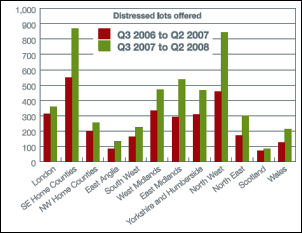
And, according to figures from Essential Information Group (EiG), the volume of
repossessed property
 appearing at auction has risen by 100 per cent over the past 18 months, so it should be an ideal time to start bidding. But is it quite so simple?
Bargain Bidding At Repossessed Property Auctions

David Sanderman, from Essential Information Group (EIG) which tracks every house that goes to auction in the country, says that you can’t assume you’re getting a bargain. "A lot of people think if you buy a repossessed property it’ll be cheap. But if you have two flats, one of which is a repossession, one, not both could sell for the same money. A property will get what it’s going to get." 
The obvious attraction in repossessed houses and flats is, of course, the temptingly low reserve, reflected in the guide price.  
It’s low because although the lender has a duty to sell at the best price, time is money, and they will want to recoup their funds as quickly as possible.
The problem for a potential auction buyer is that a low guide price may attract so many interested parties that it results in a higher sale price. 
In fact, it’s possible that you could find yourself paying over the market value because, according to David, there are many people who will be at an auction specifically with repossessions in mind. 
So, are repossessed properties likely to be bargains? Yes, but only if no one else has noticed them and is bidding against you!  

Wot No Bidders?

The good news for bidders is that there are fewer people willing to part with their money at auction than a year ago.
The EIG figures for August 2008 show that although the number of lots offered to auction was up slightly on last year, the number of sales achieved was only 55 per cent, down 14 per cent on August 2007.
Simon Zutshi, founder of Property Investors Network says: "Someone I know who went to a property auction recently told me that out of 30 lots only one sold."
But, says Simon, this is good news for serious investors.
"Previously auctions haven’t been a great place to get bargains because there were lots of amateurs who were willing to pay too much.

"But once again they’re a good place to find deals either before, during, or after the sale."


The latest RAPID report from EIG and Allsops bears this out and suggests that more repossession bargains will emerge in the months ahead:
"Despite the rapid increase in numbers of distressed sale lots, a significant proportion of repossessed properties offered at many auction houses remains unsold. 
"This is largely due to overpricing in an increasingly weak market. 
"We anticipate that the success rate will improve as lenders face up to the need to price attractively to achieve results in the face of the inevitability of rising numbers of loan failures and increasing net monthly possessions over sales.

Des Res or Repo Property Disaster?

If you decide to try and bag an auction repo, what kind of properties can you expect to find?  
According to Essential Information Group (EiG) the type of homes sold at property auctions has changed recently, with smaller lots, particularly flats, more prevalent. 
In terms of condition, David Lawrenson, who runs the property training and education company Letting Focus, says prepare yourself for the worst.  
"In general it would be most unlikely to find a repossessed home that’s spankingly clean and tidy! Repos may be in a bad state, but you can assess that when you go and view." 
But more importantly, as with any properties sold at auction, they may have serious structural or legal issues. "For the uninitiated, property prices at auctions seem low, but there is usually a good reason," warns David. "Many properties are in poor condition, have subsidence, are blighted by proposed road developments, have been occupied by squatters, have sitting tenants, or have defects in the legal title. Or they may just be unique and therefore hard to value." 
That said, auction houses are also seeing a lot of new-build properties coming under the hammer, and these may well be in much better shape.

How To Find Out About Repossessions?
There are over 200 property auctioneers in the UK, so registering with them all may be a little time consuming.  By signing up with local auctioneers you will receive details of relevant properties. However, regional homes are sometimes auctioned in London or other large cities, where they will probably attract less interest and may achieve a lower price. 
For the full picture, the excellent EiG property auctions website covers all UK auctions and allows you to search specifically for repossessions.
 
Other Ways To Find A Repossession?
The thrill of auction day isn’t for everyone, but there are other, less blood-pressure-raising ways to find and buy repossessions.
1. Ask your local estate agent
Potential auctions properties are usually offered to estate agents first, so invest some time building a relationship with your local estate agents so they see you as a serious buyer if a property comes up in your area.
Also, keep a lookout in the local papers for properties asking for ‘best offers’ by a certain closing date.
2. Buy before the sale
Many auction properties will be open to offers before the day of the sale. Look out for sales details that state ‘unless previously sold’. If you’re lucky you may be offered a repossessed property at little more than the reserve price.
3. Buy after the sale
If a property doesn’t sell the auctioneer will often have the vendor’s authority to sell it at the reserve price for up to 24 hours after the auction.


Caveat Emptor
As with any property for sale at auction, it’s a case of buyer beware, so do your homework.
The legal side of the sale should be straightforward when buying from a lender, but beyond that it’s down to you to check that you know exactly what you’re buying and that you’re ready to do business.


1. Go and see the property: You may have to go as part of a block viewing, but at least you’ll see your fellow bidders.
2. Paper Work: Before the day, get the property surveyed and legal checks completed. Be on the lookout for special conditions in the memorandum of agreement.
3. Finance In Place: Have the mortgage and insurance ready. You’ll only have 28 days to complete, and delays could lose you the property and your deposit plus the cost of re-auctioning it.
4. Deposit: You’ll need to pay a ten per cent deposit when the gavel falls, so make sure you have it with you.
5. Keep Your Head: Decide how much you’re willing to pay and stick to it.
Advice for People Facing Repossession
If you are having trouble paying your mortgage bills you shold act quickly to avoid repossession. For more information and advice, visit:
  • Consumer Credit Counselling Service
  • Citizens Advice Bureaux

Michael O'Flynn
Related stories: 
A Guide to Buying at Auction
If picking up a bargain really gets your juices flowing, then buying a property at auction may be just the thing to send the adrenalin coursing through your veins...
Sealed Bids: A Buyer's Guide
Gone are the days when an asking-price offer secured the house of your dreams. Today you may have to compete in a nerve-wracking sealed bid auction...
Estate Agent Fees: A Beginner's Guide
Estate agents' fees - it's hard to avoid them, but understanding the lingo and reading the small print can save you serious cash...

Property shortage pushes rents up

If you're one of the millions of people who currently rent their homes from a landlord, you may have noticed costs have been creeping up. Read on to find out what's going on in the market

 
The FindaProperty rental index last year showed that overall asking prices rose across the UK between June and September 2010 and that the average rent is now the highest it’s been since November 2008.
Rental prices have been steadily rising since January with landlords now asking £47 more a month than at the start of the year – an increase of 5.8 per cent.
There are also fewer rentals out there, with the FindaProperty rental index reporting that stock levels fell by 14.5 per cent between June and September 2010.
Add to this the findings of the latest Lettings Survey from Royal Institution of Chartered Surveyors (RICS), which reveals that the supply of property to rent fell for the third consecutive quarter in the three months to August 2010, and things are looking, decidedly expensive for renters.
So while it’s costing renters more per calendar month than at any time since November 2008, it’s good news for landlords whose rental yields are up on the previous quarter.
The RICs report also found 26 per cent more chartered surveyors reported a fall rather than a rise in the number of new landlord instructions, up from 18 per cent in the first quarter of the year.
Although the weather may have been a factor in this, it is more likely that the upturn in the housing market has tempted many of the accidental landlords away from the rental market, says RICS.
So could this mean an end to the falling values that have been a feature of the rental market since autumn 2008?
There were certainly fewer surveyors reporting declines in the latest quarter: the net balance of those reporting rising rather than falling rents was zero, an improvement on the five previous quarters of negative readings.
And a net balance of 33 per cent of surveyors believed that rents would rise over the coming quarter, up from 22 per cent in the previous report.
Surveyors were also positive about rental demand, with 16 per cent more respondents reporting a rise rather than a fall this quarter.
RICS spokesperson Jeremy Leaf commented: "The RICS housing survey has seen a steady increase in the number of new instructions coming on to the market over the past few months, whilst simultaneously we see with this survey that the number of properties available to rent has decreased.
"This is a clear sign that the accidental landlords are returning to the sales market.
"If demand remains strong, which it is likely to as many first-time buyers are still finding themselves priced out of the housing market, then rents should continue to rise as would be tenants compete for fewer properties."

Wednesday, 28 December 2011

Britain’s most persistent first-time buyers: Rebecca Trimble

First-time buyer Rebecca Trimble moved back in with her parents to help save, but it was a shared equity scheme that gave her and her partner the extra push they needed to get on the property ladder 

Rebecca Trimble may have moved into her first home just five weeks after first viewing it, but her battle to get on the property ladder was a much longer, more difficult, journey.
So desperately did Trimble, 24 and her partner Kieren Travers, 24, want to buy their first home that that they moved in with Trimble’s parents so they could concentrate on saving a deposit. 
Despite these efforts, the couple, both sales administrators in Manchester, still couldn’t find any homes they could afford.
“We’d been saving for ages,” Trimble said. “But everything we looked at was too expensive for us as first-time buyers. We just kept saving and put our plans on hold.”
Still hopeful of one day realising their dream of home ownership, the couple last year viewed Arley’s Chanters Green development in Atherton, near Manchester, where they fell in love with a three bedroom home with a garden, which was on the market for £127,000.
Trimble says she was thrilled when the developer later telephoned and told her about a shared equity scheme for which the couple were eligible and which required them to provide a five per cent deposit.

Under the agreement, the couple purchased 80 per cent of the property, while the developer retained the final 20 per cent, which can be purchased over an arranged period or paid back upon sale of the property.
 “We really loved the house but we wouldn’t have been able to get a mortgage for the full amount or a deposit for the full amount, so the shared equity scheme worked well for us.”
The couple found the sale process hassle-free and lightening fast. “We were so lucky because we were able to move in within five weeks of when we first came to look at the home. It all happened really quick,” she says.
“From the first day when we came looking, we reserved the house, and then the developer put us in touch with a financial advisor and they looked after everything for us. They (the developer) even advised us of a solicitor we could deal with.”
The couple are now settled  into their new home and couldn’t be happier .“I can’t describe it, it’s just brilliant,” Trimble said. “We have been together quite a while so just to have our own place is amazing.”

Star homes: Why the rich and famous move to the Cotswolds

What do Kate Moss, Liz Hurley, Jeremy Clarkson and Harry Potter have in common? It’s the Cotswolds, of course, which has long been a magnet for those seeking a celebrity lifestyle with an English twist


It’s the Beverly Hills of the UK, where the rich and famous live within a 90-minute’s limo ride of central London but with enough countryside and privacy to shelter from the paparazzi when the inevitable scandal breaks. Yes, welcome to the Cotswolds.
To those who don’t know Lily Allen from Lily Savage, the Cotswolds stretches 90 miles by 25 miles and is England’s largest Area of Outstanding Natural Beauty. But to celebrity-spotters this area, from Cirencester and Cheltenham in the west to Oxford and Banbury in the east, has more stars than the Milky Way.

So why do celebrities prefer green wellies to red carpets?
“The Cotswolds is far enough away from London to be ‘proper’ country but close enough to be accessible,” explains George Barkes of Stacks Property Search, a buying agency helping stars find homes in the Cotswolds. “There’s plenty of appropriate property to be found and celebrities don’t feel their homes and wealth stand out”
“There are gastro pubs, Daylesford organics, two polo grounds, and Cirencester has a good selection of one-off shops,” says Frank Speir of Prime Purchase, another buying agency. “Well known people are ten-a-penny which means local residents are unfazed by celebrities”
The Cotswolds’ stardust doesn’t just fall outside celebrities’ front doors - the whole region has become a favourite with TV show and film makers.
The Harry Potter movies were shot there, as was The Other Boleyn Girl with Scarlett Johansson, and Bridget Jones’ Diary and Die Another Day. Most of the Inspector Morse country scenes outside of Oxford feature the Cotswolds, too.
Unsurprisingly, estate agents have plenty of celebrity-friendly homes on sale.
There is Shipton Sollar, an eight bedroom 17th century mansion with a party barn (a celeb must) and 35 acres of land for £3.25m. Or try the five bedroom Wells Farmhouse  for £2.5m with its separate two bedroom annexe, gym and games area - ideal for wrap parties after the film.
Stars who call the Cotswolds home: 
• Dom Jolly - Quenington
• Jemima Khan - Kiddington
• Damian Hurst - Toddington
• Liz Hurley - Barnsley
• Kate Moss - Little Faringdon
• Anne Robinson - Gloucestershire
• Kate Winslet – Westcote
• Jeremy Clarkson – Chipping Norton
• Alex James - Kingham
• Lily Allen - Overtown
• Stella McCartney - Pershore
• J K Rowling - Chipping Sodbury
• Joanna Trollope - Minchinhampton
• Jilly Cooper - Bisley
• Lawrence Llewellyn-Bowen - Cirencester

Words: Graham Norwood

Thursday, 22 December 2011

That's unusual:Beach huts are the ultimate seaside property

Fancy a bit of sand between your toes this summer? The traditional English beach hut can be cheap, charming and buckets of fun 

Sunshine, long weekends, picnics and sand between our toes - yes, the quintessential English holiday season is on us again. And so is the traditional beach hut story. But whereas the papers concentrate on the high cost of huts in a few parts of the country, the reality is that in most places they are cheap, charming and enormous fun.
“Mine has been in my family for three generations and I intend to pass it on to my children and theirs” says Sylvia Jones, who lives in Cardiff but has her hut at Dunster Beach, Somerset. “There is no way we could afford a second home but this is a low-cost way of having a retreat with the best sea view in the world. We come down on bright days during the winter, then stay overnight for weekends in the spring and summer. Lovely.”
Of course you can pay the earth. Back in 2001 artist Tracey Emin sold hers in Kent to advertising guru Charles Saatchi for £75,000 and at Mudeford Spit in Dorset some have changed hands for over £100,000. With celebrities like Suggs from Madness and the Rolling Stones’ Keith Richards having huts, ownership may carry a certain cache.


Yet beach huts began as simple changing rooms on beach edges where nothing else could be built and even today plenty are, in the best sense of the word, cheap. Scour the internet for private sales or try seaside estate agents (Pittis on the Isle of Wight is selling one on Appoley Beach for £14,000.
Whatever your budget, follow these tips:
• Check local council 'occupation rules'. Some forbid overnight stays;
• Some huts have covenants that prohibit letting, although this is rare;
• Find out management fees and costs of security measures like CCTV, security lighting, or occasional security guard visits;
• If you cannot visit frequently, hire a 'carer' - they exist in most resorts and will do a weekly check for a nominal fee.
Annual costs include council tax or commercial rates, repainting and weather-protection. Insurance is about £100 per year and annual council licences are £125 to £1,500. You may also have to pay 20 per cent of your rental income to a lettings agent if you hire one.
 Have fun - and remember the sun tan lotion.